
All blogs
AI App Development
Voice Accessibility Trends in Mobile Apps 2025
Explore the transformative trends in voice accessibility for mobile apps in 2025, enhancing usability for diverse users through AI and personalized features.
11 min read
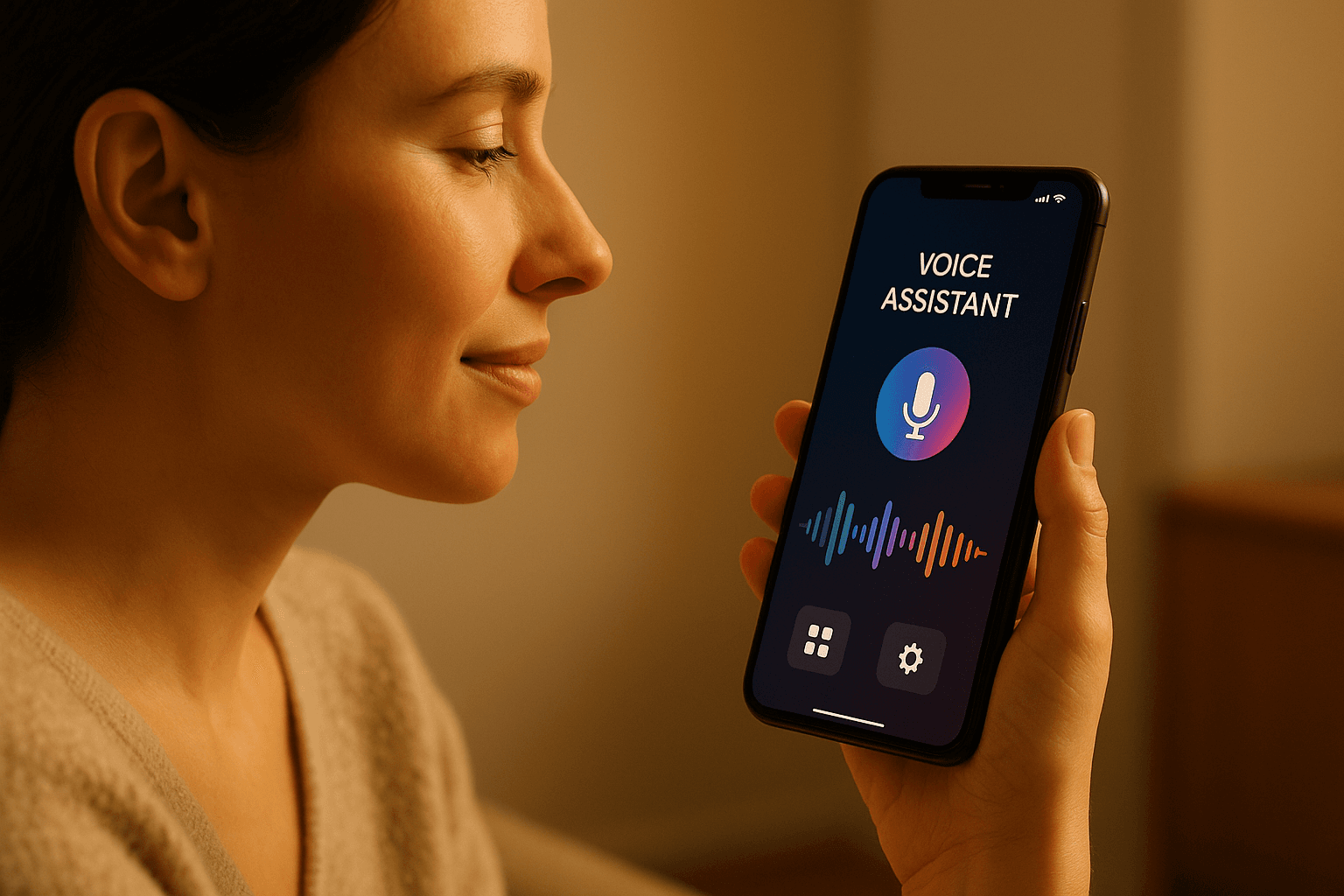
Voice Accessibility Trends in Mobile Apps 2025
Voice accessibility in mobile apps has become essential in 2025, driven by the need to support diverse users, including over 1 billion people with disabilities. With AI advancements and growing mobile usage (7.49 billion users globally by year-end), apps are evolving to offer smarter, more user-friendly voice features.
Key trends include:
- AI-Powered Voice Assistance: Systems now manage complex requests, detect emotions, and understand context for smoother interactions.
- Personalized Voice Recognition: Tailored speech profiles cater to diverse accents, speech patterns, and disabilities, enhancing usability and security.
- Multilingual and Cross-Platform Support: Real-time language processing and universal voice commands simplify navigation across devices and apps.
- Voice-First Design: Apps prioritize voice interfaces, making them more accessible for users with visual or motor challenges.
Modern APIs and tools like Google Cloud Speech-to-Text and on-device processing ensure developers can implement these features effectively while prioritizing privacy. For businesses, investing in voice accessibility is no longer optional - it’s a necessity to meet user expectations and legal requirements.
Android Voice Access vs IOS 13 Voice Control - What Google Assistant & Siri Can't Do.
Key Voice Accessibility Trends for 2025
The world of voice accessibility is evolving at a rapid pace, with advancements making voice interfaces smarter, more inclusive, and easier to use. These developments are building on past progress to create better, more user-friendly experiences for everyone.
AI-Powered Voice Assistance
Artificial intelligence is reshaping voice assistants, turning them from basic command tools into sophisticated conversational partners. Today’s systems can handle complex, multi-step requests and even keep track of context during longer conversations, making navigation smoother and more intuitive.
One of the most exciting advancements is the integration of emotional intelligence. Modern voice assistants can now pick up on emotional cues like frustration or urgency in a user’s tone. For instance, if someone with visual impairments seems to be struggling to find information, the assistant can respond with extra patience and detailed guidance.
Another leap forward is in contextual understanding. Voice assistants now remember the flow of a conversation within a session. For example, if you ask, "What’s the weather like?" and then follow up with, "How about tomorrow?" the system understands you’re still talking about the weather without needing additional clarification.
Thanks to advanced neural networks, these systems are better at processing natural speech patterns, including pauses, corrections, and informal language. This improvement is especially helpful for users with speech differences or cognitive challenges, making interactions feel more natural and accessible.
Personalized Voice Recognition
Voice recognition technology is becoming more tailored to individual users, creating personalized speech profiles that adapt to unique vocal characteristics. This is a game-changer for people with speech disabilities, strong accents, or conditions that affect their voice.
Using adaptive algorithms, these systems learn and refine their understanding of a user’s speech over time. They can pick up on personal vocabulary, rhythm, and pronunciation, which is particularly helpful for individuals with conditions like cerebral palsy or speech changes following a stroke.
The addition of voice biometrics enhances security while keeping accessibility in mind. Users can now authenticate themselves through their unique vocal patterns, removing the need for complex passwords or physical gestures that might be challenging for those with motor disabilities.
Another exciting development is the ability to create custom wake words. Instead of relying on standard phrases like "Hey Siri" or "OK Google", users can choose activation phrases that are easier for them to pronounce or remember. This flexibility is especially helpful for people with memory challenges or difficulty with certain sounds.
To make these systems even more inclusive, developers are training machine learning models on diverse speech samples, including voices from people with disabilities, various accents, and different speech patterns. This ensures the technology works well for a broader range of users.
Multilingual and Cross-Platform Support
Language barriers are being dismantled with real-time multilingual processing, allowing users to switch languages seamlessly during conversations. This feature is invaluable for people who feel more comfortable expressing ideas in their native language or live in multilingual households.
Cross-platform synchronization is another key trend. Voice preferences and personalization settings now follow users across all their devices. For example, if you set up commands on your smartphone, those same settings will work on your tablet, smart home devices, and even web apps.
This integration extends to universal voice commands, enabling users to perform similar tasks across different apps and platforms with the same shortcuts. This consistency reduces the learning curve and makes it easier for individuals with disabilities to navigate multiple systems.
Cloud-based voice processing is also making an impact. Smaller, less expensive devices can now access powerful voice recognition features without needing high-end hardware. This means voice accessibility is becoming available to more people, regardless of their budget.
Finally, the shift toward voice-first design is gaining traction. Instead of being an afterthought, voice interaction is becoming the primary interface for many apps. This approach creates a more natural experience for users who rely on or prefer voice navigation.
Together, these trends signal a move toward smarter, more inclusive voice accessibility solutions that cater to the diverse needs of users in 2025. From advanced AI to personalized recognition and seamless integration, the future of voice technology is all about making interactions more intuitive and user-friendly for everyone.
Designing Voice User Interfaces (VUIs)
Creating effective Voice User Interfaces (VUIs) hinges on crafting precise and intuitive audio interactions. Since they rely entirely on sound, thoughtful design is essential to ensure accessibility and usability for all users.
Clear and Simple Voice Responses
The backbone of any successful VUI is delivering clear, concise voice responses that are easy to understand and act upon. Responses should strike a balance between being conversational and informative, steering clear of overly technical jargon that might confuse users. Each response should focus on a single concept to avoid overwhelming the listener. Including confirmations and clarifications helps reinforce key details, ensuring users feel confident in their interactions. These principles lay the groundwork for effective audio cues that guide users in non-visual environments.
Audio Feedback for Non-Visual Users
Audio feedback plays a crucial role in guiding users who rely solely on sound. Clear and distinct audio cues can provide information about location, confirm actions, and alert users to errors. Unique sounds can replace visual indicators, making navigation more intuitive. Spatial audio cues - where sounds are perceived from specific directions like left, right, or center - further enhance usability by helping users mentally map the interface layout.
Adjusting to Different Environments
Designing VUIs also means accounting for varying acoustic environments. Noise reduction algorithms are key to filtering out background noise while preserving the clarity of the user's voice. Machine learning models trained on diverse soundscapes can distinguish human speech from ambient noise and adapt dynamically to new environments.
In June 2025, Fora Soft's client BlaBlaPlay, an anonymous social network platform, adopted OpenAI's Whisper for voice transcription and CoreML for on-device processing. This combination handled voice messages in challenging acoustic conditions, improving noise reduction and real-time performance while enhancing content moderation and voice quality.
Technologies like microphone arrays and beamforming further enhance audio capture by focusing on sound from a specific direction, effectively filtering out irrelevant noise. Different acoustic challenges require tailored solutions:
| Environment Challenge | Best Solution | Primary Benefit |
|---|---|---|
| Crowded spaces | Beamforming technology | Isolates the user's voice direction |
| Steady background noise | Active noise cancellation | Eliminates consistent background sounds |
| Large rooms with echo | Echo reduction algorithms | Reduces self-hearing and reverberation |
Context-aware processing adds another layer of adaptability by considering factors like location, time of day, and user habits. For instance, a VUI might increase sensitivity and provide more detailed feedback in noisy settings, while switching to brief responses in quieter environments.
Dynamic volume adjustment ensures that voice responses remain audible without being intrusive. By analyzing ambient noise levels, the system can automatically adjust its output - speaking louder in noisy spaces and softer in quieter ones.
Hybrid models that combine traditional speech recognition with deep learning approaches have proven effective in handling challenging acoustic conditions. These models maintain accuracy even when background noise overlaps with the frequencies of human speech, a common issue in everyday environments.
sbb-itb-622dc24
Adding Voice Accessibility Features to Mobile Apps
Incorporating voice accessibility features into mobile apps is now easier than ever, thanks to modern APIs that bring advanced speech and emotion recognition capabilities to developers.
Using Cloud-Based Voice APIs
Cloud-based voice APIs form the backbone of speech recognition and text-to-speech tools. For instance, Google Cloud Speech-to-Text API provides real-time transcription and supports multiple languages, making it ideal for global applications. On the other hand, Apple's Speech framework offers on-device recognition for iOS apps, which enhances privacy and speeds up response times by working offline.
Microsoft Azure Cognitive Services Speech lets developers customize for specific vocabularies or accents, while Amazon Transcribe stands out with its ability to identify multiple speakers in group conversations.
Setting up these APIs involves configuring access and managing audio responses. Pricing models vary, with options like pay-as-you-go and free tiers catering to different budgets. These tools also pave the way for advanced features, such as emotion recognition, which can take user interactions to the next level.
Improving UX with Emotion Recognition
Emotion recognition adds a layer of empathy to voice interactions. APIs like Affectiva's Emotion AI and IBM Watson Tone Analyzer analyze vocal elements such as pitch, speaking pace, and volume. These insights allow apps to adjust their responses dynamically - for example, slowing down speech for clarity or offering extra assistance when frustration is detected.
In June 2025, Fora Soft's client BlaBlaPlay, an anonymous social network platform, adopted OpenAI's Whisper for voice transcription and CoreML for on-device processing. This setup improved voice quality and moderation in challenging acoustic conditions while enhancing real-time performance.
Processing voice data locally on devices not only boosts performance but also ensures sensitive information stays secure, making it a win-win for both functionality and privacy.
Combining Voice and Touch Interfaces
Pairing voice and touch interfaces creates a more flexible and accessible user experience. For example, users can start tasks with voice commands and finish them using touch, or switch between the two depending on their environment.
This combination is especially helpful for visually impaired users, as apps can provide verbal descriptions of on-screen elements to guide interactions. In noisy settings, touch inputs take priority, while voice commands shine when users’ hands are occupied. By balancing these modes, apps can recover gracefully from errors and adapt to various user needs.
These innovations reflect the growing trend toward more inclusive, multimodal mobile experiences. At Appeneure, we embrace these advancements to create apps that cater to diverse user needs and deliver seamless accessibility.
Conclusion and Future Outlook
Voice accessibility has become a cornerstone of mobile app development. The trends shaping 2025 highlight a growing demand for smarter, more personalized voice interactions. These advancements are redefining how users engage with technology, opening up exciting possibilities for developers and businesses alike.
Key Takeaways from 2025 Trends
AI-driven personalization is reshaping voice interactions, allowing apps to adapt to individual speech patterns, accents, and user preferences. This shift signals the end of one-size-fits-all solutions, pushing developers to create tailored experiences that resonate with diverse audiences.
Consistency across devices and the seamless blending of voice and touch interfaces are now critical. Leading apps in 2025 no longer force users to choose between interaction methods; instead, they integrate both in a way that feels natural and intuitive.
Advancements like emotion recognition and environmental adaptation showcase how far voice technology has come. Apps can now detect user frustration and adjust their responses or switch interaction modes based on background noise, making interactions smoother and more user-friendly.
These developments highlight a wealth of opportunities for those ready to innovate in the voice accessibility space.
Opportunities for Developers and Businesses
For developers and businesses, the voice accessibility market offers immense potential. Increasingly stringent accessibility regulations not only ensure compliance but also reward companies that prioritize inclusive voice features, helping them reach broader audiences.
Cloud-based APIs have leveled the playing field, making advanced voice technologies available even to small teams. With pay-as-you-go pricing models, developers can experiment with new features without heavy upfront costs, fostering creativity and innovation.
The rise of AI-powered app development is another game-changer. Companies like Appeneure have demonstrated how integrating conversational AI into core app functions can transform user experiences. As AI models continue to evolve, these integrations will become even more impactful.
Privacy is also emerging as a key differentiator. Users are gravitating toward apps that process voice data locally rather than relying solely on the cloud. Developers who embrace on-device processing can build trust while setting their apps apart in a competitive market.
The future of voice accessibility lies in seamless integration. Apps that treat voice as an integral part of their core functionality - not just a standalone feature - are poised to dominate. Voice accessibility is no longer optional; it's a fundamental design principle that defines success in today’s mobile landscape.
FAQs
How does AI-powered voice assistance enhance accessibility for users with disabilities in mobile apps?
AI-powered voice assistants are transforming accessibility by offering real-time speech recognition and text conversion, which simplifies communication for people with hearing impairments. They can also adjust to unique speech patterns, including those affected by speech disorders, ensuring interactions are more precise and tailored to individual needs. By bridging communication gaps, these tools are helping to create a more inclusive experience for individuals with mobility or speech challenges.
How does personalized voice recognition improve accessibility for users with unique speech patterns or disabilities?
Personalized voice recognition takes accessibility to the next level by adjusting to the unique way each person speaks. This makes interactions not only more accurate but also more natural. It's a game-changer for people with speech impairments, strong accents, or disabilities, allowing for smoother communication and effortless hands-free control of devices.
For individuals dealing with conditions like Parkinson’s disease, motor impairments, or vision loss, this technology significantly reduces errors and enhances responsiveness. By customizing recognition systems to fit specific needs, it opens the door to greater independence and usability for a wide range of users.
How can developers protect user privacy when adding advanced voice accessibility features to mobile apps?
To protect user privacy while offering advanced voice accessibility features, developers should focus on data encryption and anonymization to ensure voice data remains secure from unauthorized access. It's equally important to adhere to privacy regulations such as GDPR and CCPA, while providing clear, transparent privacy policies that detail how user data is collected and used.
For even greater security, adopting on-device processing for voice commands is a smart move. This approach reduces the need to send sensitive data to external servers, lowering potential risks and strengthening user confidence in the app’s dedication to safeguarding their privacy.
More from the studio

