All blogs
AI App Development
Connection Pooling Strategies for AI-Powered Apps
Explore connection pooling strategies that enhance the performance and efficiency of AI-powered mobile apps, ensuring smooth operations under varying conditions.
11 min read
Connection Pooling Strategies for AI-Powered Apps
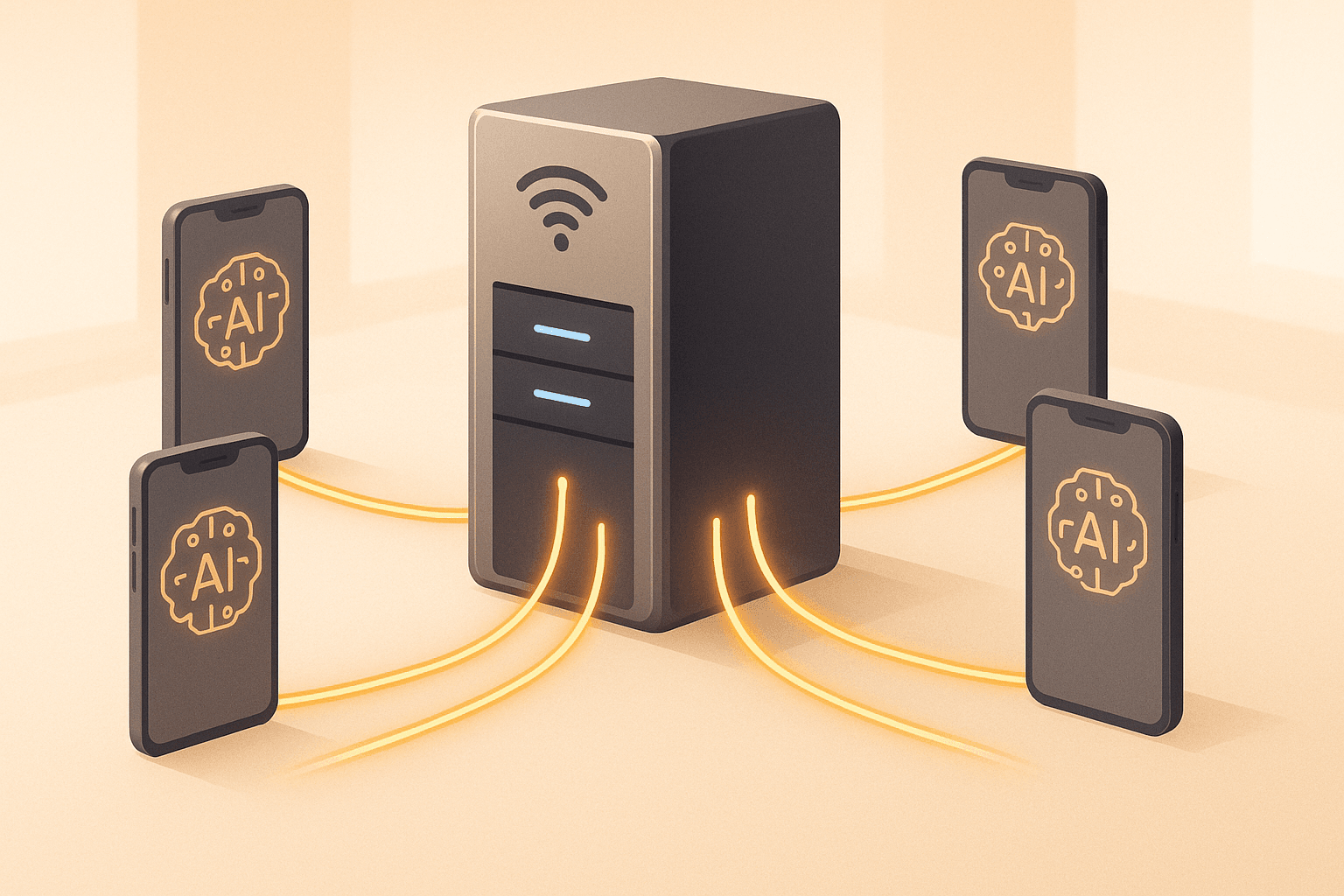
Connection pooling is key to making AI-powered apps run efficiently, especially when handling database interactions. Instead of creating a new database connection for every request, apps reuse a pool of pre-established connections. This saves time, reduces resource strain, and ensures smooth performance, even under heavy workloads.
Here’s a quick breakdown of strategies to optimize connection pooling for AI apps:
- API-Based Management: Offload connection handling to the backend via APIs, simplifying mobile app operations.
- Request Queuing/Batching: Group database calls during poor connectivity to improve efficiency.
- Offline-First Approach: Store data locally on the device and sync with servers when online.
- Adaptive Pooling: Adjust pool sizes based on network, device performance, and user activity.
- Advanced Techniques: Use partitioned pools for different tasks or dynamic pool sizing for unpredictable workloads.
For mobile apps, focus on lightweight pooling to conserve battery and memory, adapt to changing networks, and use API gateways to centralize tasks. Each strategy has unique benefits and trade-offs, so choosing the right one depends on your app’s needs and user environment.
Database Connection Pooling Explained: Boost App Scalability!
Key Connection Pooling Strategies for AI-Powered Apps
AI-powered mobile apps rely on efficient connection pooling to keep things running smoothly and avoid delays. Below are strategies that help optimize connection management in various mobile AI scenarios.
API-Based Connection Management
One effective approach is shifting connection pooling responsibilities from the device to the server. Instead of directly handling database connections, the mobile app communicates through REST or GraphQL APIs, leaving connection management to API gateways.
API gateways are great at centralizing tasks like rate limiting, authentication, and traffic shaping. They also use intelligent caching to reduce latency, especially for frequently used AI queries, by cutting down on unnecessary backend calls.
Modern API management platforms take this a step further with automated traffic management. By analyzing historical usage patterns, they can predict demand and adjust resources accordingly, ensuring APIs remain responsive even during unexpected traffic surges.
Next, let’s look at how queuing requests can improve efficiency when connectivity is unreliable.
Request Queuing and Batching
Intermittent connectivity is a common challenge for mobile apps. Sending individual requests during such times can be inefficient. A better approach is to queue database operations and process them in batches once the network stabilizes.
For instance, an app can store multiple AI-related requests - such as logging user interactions, fetching model updates, or recording prediction results - and send them all at once when a stable connection becomes available. This not only saves resources but also ensures smoother operation during poor connectivity.
Building on this, offline-first strategies can further enhance app functionality in environments with limited internet access.
Offline-First Architecture
Mobile devices often face unreliable internet connections. An offline-first architecture addresses this by maintaining local database connections, such as with SQLite, directly on the device. This ensures that AI operations continue without interruption, even when the network is down.
User interactions, predictions, and other data are stored locally first and then synced with remote servers and their connection pools once connectivity is restored. For example, a fitness app using AI to recommend workouts can still analyze performance and suggest exercises even when Wi-Fi is spotty.
While these static strategies are effective, dynamic approaches can take optimization to the next level.
Adaptive Connection Strategies
Mobile environments are constantly changing, so connection pooling needs to adapt in real time. Adaptive strategies adjust connection pool parameters based on factors like network type, device performance, and user activity.
For example, when connected to a stable Wi-Fi network, an app might increase the connection pool size to take advantage of faster speeds. On the other hand, it might reduce the pool size on cellular networks or during roaming to save data and battery life. Similarly, if the app detects high CPU usage or limited memory, it can temporarily shrink the pool to free up resources for critical AI tasks. These real-time adjustments help balance performance and resource use in ever-changing mobile environments.
Advanced Techniques for High-Scale AI Workloads
When it comes to scaling AI applications, sticking to basic connection pooling just doesn’t cut it. At the enterprise level, where user volumes are massive and operations are complex, more sophisticated strategies are crucial to keep performance steady. Two standout methods for managing these heavy workloads are connection pool partitioning and dynamic pool sizing.
Connection Pool Partitioning
This method involves splitting connection pools based on the type of operation - think read-only queries versus writes or short, quick tasks versus longer, resource-heavy ones. The idea is to prevent demanding tasks from clogging up the system for lighter operations.
Here’s a real-world example: A hospital network created separate pools for different scheduling tasks. By isolating viewing functions from editing operations, they managed to speed up shift assignments by 40% during critical staffing periods. Another case? An industrial manufacturer used a read-write splitting strategy, enabling them to handle three times as many concurrent users during busy shift changes.
For AI apps, this approach is a lifesaver. It allows you to dedicate lightweight, fast pools for real-time predictions while reserving heavier-duty pools for tasks like model updates and batch processing.
Distributed Connection Pools
For applications that span multiple servers or even cloud regions, distributed pooling steps in. These pools coordinate connections across various nodes, ensuring the workload is balanced and providing failover support if a server goes down. It’s a game-changer for reliability and scalability in large, distributed systems.
Dynamic Pool Sizing
Static connection pools can’t keep up with the unpredictable nature of AI workloads. That’s where dynamic pool sizing shines. By monitoring metrics like active connections, queue lengths, and response times in real time, the system adjusts the number of active connections to match demand. When traffic spikes, it scales up. When things quiet down, it scales back.
The real magic happens with predictive algorithms that analyze historical data to anticipate demand spikes. Of course, this system needs careful tuning - setting minimum and maximum pool sizes and adding cooldown periods between scaling events - to avoid instability.
These advanced techniques are a must for handling high-scale AI workloads while maintaining reliable performance. At Appeneure, we’ve made these methods part of our toolkit to deliver scalable, resilient AI-powered solutions.
sbb-itb-622dc24
Mobile-Specific Considerations for Connection Pooling
When dealing with high-scale workloads on mobile devices, it’s essential to account for their unique limitations. Unlike server environments, mobile devices face constraints like limited battery life, restricted memory, and unpredictable network conditions. Without proper optimization, strategies that work for servers can easily overwhelm mobile systems.
Lean Pooling for Resource Constraints
Mobile devices don’t have the luxury of abundant resources, so connection pooling needs to be as efficient as possible. Instead of maintaining a large pool of idle connections, focus on creating connections only when needed and releasing them quickly afterward. Using shorter timeouts for idle connections can save memory and reduce battery consumption. Reusing active connections rather than frequently establishing new ones also helps minimize the strain on these devices.
Adapting to Network Conditions
Mobile networks are inherently unpredictable. Users frequently switch between Wi-Fi and cellular networks or experience fluctuating signal strength. Connection pooling must adapt to these changes in real time. For example, when a stable Wi-Fi connection is available, apps can afford to use a slightly larger pool to capitalize on better bandwidth. On cellular networks, however, a smaller pool is more efficient, reducing latency and saving on data costs. Compression techniques can further optimize data usage, while mechanisms to handle network interruptions - like marking failed connections and retrying requests - ensure seamless performance. These adjustments can be managed centrally through an API gateway for better consistency.
Streamlining with API Gateways
Using an API gateway to handle connection pooling can lighten the load on mobile devices. Instead of each app managing its own connections, the gateway can centralize tasks like database access, AI service requests, and more. This setup simplifies error handling, strengthens security, and streamlines authentication. Mobile-specific optimizations, such as intelligent request routing, response compression, and caching, can also be implemented at the gateway level. For AI-heavy applications, the gateway can queue resource-intensive prediction requests during peak times, maintaining smooth performance even when network conditions fluctuate.
Comparing Connection Pooling Strategies: Advantages and Disadvantages
Selecting the right connection pooling strategy is not a one-size-fits-all decision. Each approach has its own strengths and weaknesses, which can directly impact your app's performance. The trick is to align the strategy with your app's specific needs and use cases.
Let’s break it down. API-based connection management is a great fit for apps with a reliable backend and the need to scale quickly. On the other hand, request queuing and batching handles traffic surges effectively but might leave users waiting for responses. Offline-first architecture keeps users engaged even without internet access, though it introduces challenges with synchronization. Finally, adaptive strategies offer flexibility by adjusting to changing conditions, but they demand constant monitoring and fine-tuning. Your choice here can make or break the performance of AI-powered apps.
Comparison Table for Connection Pooling Strategies
| Strategy Name | Best Use Case | Key Advantages | Potential Drawbacks | Suitability for AI/Mobile Apps |
|---|---|---|---|---|
| API-Based Connection Mgmt | Scalable API-driven apps | Simplifies backend management | Requires stable API infrastructure | High |
| Request Queuing/Batching | Managing bursty traffic | Reduces connection overhead | Adds latency for some requests | High |
| Offline-First Architecture | Apps with offline functionality | Works without internet connection | Complex synchronization setup | Medium |
| Adaptive Strategies | Varying network/device conditions | Adjusts to current conditions | Requires continuous monitoring | High |
Here’s a closer look at the pros and cons of each approach:
API-based connection management simplifies backend operations and scales well with predictable traffic. However, it introduces a single point of failure - if the API gateway goes down, the entire app could be affected. This strategy is ideal for apps with consistent traffic and reliable network conditions.
Request queuing and batching excels in managing bursts of traffic, making it a good choice for AI apps that handle multiple inference requests at once. The downside? It can increase latency, which might be a dealbreaker for real-time applications.
Offline-first architecture ensures a seamless user experience during network interruptions. For AI-powered apps, this might involve caching model predictions or using lightweight on-device models as backups. The challenge lies in synchronizing data when connectivity is restored, especially when resolving conflicts between local and server data.
Adaptive strategies are the most dynamic, adjusting connection pools based on network conditions, device resources, and traffic. While this ensures optimal performance across various scenarios, it requires robust monitoring systems and can be difficult to troubleshoot when issues arise.
When deciding on a strategy, think about your app's resource limitations. For example, mobile devices with restricted memory and battery life might benefit from simpler solutions like API-based management. Meanwhile, more powerful devices, such as tablets or high-end smartphones, can handle the complexity of adaptive approaches. The frequency of AI model calls is another factor - apps making frequent predictions need a different approach than those with occasional requests.
Finally, consider network reliability in your target regions. If your app serves users in areas with unreliable internet, offline-first or adaptive strategies are better suited. For users with consistent high-speed connections, API-based approaches can deliver the scalability you need.
Best Practices for AI-Powered App Performance
To get the most out of connection pooling in AI-powered apps, you need a thoughtful approach and ongoing fine-tuning. Start by setting up robust monitoring systems - this is essential for making smart adjustments.
Keep an eye on connection pool metrics like active connections, wait times, and timeouts. Pair this with AI-specific performance metrics such as model inference latency and batch processing durations. These insights can help you spot bottlenecks early, allowing for real-time adjustments that keep everything running smoothly.
When configuring pool sizes, base them on actual usage patterns, not theoretical limits. Start cautiously and scale up as needed. This avoids overloading backend systems or wasting device resources.
Resilience is just as important as efficiency. Plan for graceful degradation by switching to cached predictions, simpler on-device models, or queuing non-critical requests when capacity is maxed out. Fine-tune timeout settings to match the complexity of each AI operation instead of applying a one-size-fits-all rule.
Batching AI requests is another area where you can find balance. Experiment with batch sizes to optimize efficiency without adding unnecessary delays. And when failures happen, use proactive strategies like exponential backoff for retries or fallback options such as offline modes or cached responses.
For mobile apps, focus on lightweight solutions. Use efficient libraries and close idle connections quickly to conserve memory and battery life. Testing is also key - simulate real-world conditions like varying network speeds, device capabilities, and user loads to identify issues before they affect users.
FAQs
How does adaptive connection pooling boost the performance of AI-powered mobile apps during changing network conditions?
Adaptive connection pooling boosts the performance of AI-driven mobile apps by smartly managing and reusing active connections. Instead of creating new connections every time - which can be resource-intensive - this method minimizes delays and conserves resources, especially when networks are unstable or traffic is heavy.
With the help of AI, apps can keep an eye on real-time network conditions and tweak connection settings as needed. The result? Faster response times, lower latency, and a smoother experience for users, even during peak usage or tough network situations.
What are the challenges and advantages of using an offline-first architecture in AI-powered apps?
Adopting an offline-first architecture for AI-powered apps offers several clear benefits. It allows apps to function seamlessly even without an internet connection, speeds up load times, improves the overall user experience, and strengthens data privacy. These perks are particularly useful for mobile and data-heavy applications where stable internet access isn't always available.
That said, there are some hurdles to address. Synchronizing data across multiple devices, maintaining consistency, and dealing with unpredictable network conditions can be tricky. Successfully implementing this approach demands thoughtful planning and strong data management practices. When done right, offline-first architecture can make apps more dependable and leave users far more satisfied.
Why are API gateways essential for connection pooling in AI-powered mobile apps, and how do they improve performance?
API gateways are essential for managing connection pooling in AI-driven mobile apps. By efficiently reusing persistent connections, they help cut down on latency, boost throughput, and keep performance steady - even during peak usage times. This is especially critical for data-heavy apps, as it allows for quicker response times and better support for multiple users at once.
Beyond connection pooling, API gateways contribute to app performance through features like request aggregation, load balancing, and security management. These functions work together to enhance the app's responsiveness and reliability, ensuring a smooth user experience in AI-powered mobile applications.
More from the studio