
All blogs
AI App Development
Agile Frameworks for AI-Powered Apps
Explore how Agile frameworks enhance AI app development by addressing unique challenges like model unpredictability and data management.
15 min read
Agile Frameworks for AI-Powered Apps
Agile frameworks like Scrum and Kanban are ideal for managing the unique challenges of AI-powered app development. AI projects often involve unpredictable model behaviors, complex data pipelines, and frequent experimentation, which traditional development methods can't handle effectively. Agile's iterative cycles and flexibility make it easier to adapt to these demands.
Key Takeaways:
- Scrum: Best for projects with clear milestones, using sprints for structured iterations and regular feedback.
- Kanban: Ideal for continuous workflows, handling shifting priorities, and managing ongoing tasks like model updates.
- Challenges in AI Development: Managing large datasets, ensuring model reliability, and balancing multiple disciplines like data science and app development.
- Tools: MLflow (experiment tracking), DVC (data versioning), BentoML (model deployment), and Kubeflow (workflow orchestration) streamline Agile workflows for AI.
- Real-World Example: Appeneure successfully used Agile to develop a healthcare app, delivering 95% of planned features on time.
Agile frameworks enable teams to stay flexible, collaborate effectively, and iterate quickly in the fast-paced world of AI development.
AI Agile Team Builds a FULL App Step by Step Tutorial (BMAD Method)
Main Agile Frameworks for AI-Powered Apps
When building AI-powered applications, two Agile frameworks stand out: Scrum and Kanban. According to the 2024 State of Agile report, Scrum is used by 66% of Agile teams, while Kanban accounts for 15%. Hybrid approaches are also gaining popularity, especially in AI and data science projects. These frameworks tackle unique challenges in AI development, such as the continuous experimentation required for machine learning models and the constant adjustments needed for data pipelines. Let's dive into how each framework aligns with these demands.
Choosing between these frameworks depends on your project's needs. Scrum is ideal when you have well-defined deliverables and can benefit from structured feedback loops. On the other hand, Kanban thrives in environments where priorities shift often, and continuous delivery is key.
Scrum Framework for Sprint-Based Development
Scrum organizes AI development into short, focused sprints that typically last 2–4 weeks. This time-boxed approach creates regular checkpoints for evaluating models and adjusting strategies. Instead of spending months on a machine learning model only to discover it falls short, teams can test and refine their work every few weeks.
Three key roles drive the Scrum process:
- Scrum Master: Ensures smooth workflows and removes obstacles - especially helpful when tackling complex data pipeline issues or model training challenges.
- Product Owner: Balances business priorities with technical AI requirements by setting clear goals and defining deliverables.
- Development Team: Includes data scientists, developers, and QA engineers who collaborate on both traditional app features and AI-specific components.
Daily stand-ups are essential for discussing code updates, model performance, data quality, and experiment results. Sprint reviews provide opportunities to showcase improvements and gather stakeholder feedback, while retrospectives help refine strategies for managing the unpredictable nature of AI development.
Sprints are often allocated to specific tasks like model exploration, data preprocessing, integration, and testing. This structure ensures steady progress and prevents teams from getting stuck in endless model tuning.
While Scrum’s fixed sprints work well for structured iterations, Kanban offers a more fluid approach that suits dynamic workflows.
Kanban Framework for Continuous Workflow
Kanban focuses on continuous workflow and visual task management. Teams use boards to track tasks through stages like "Data Collection", "Model Training", "Testing", and "Deployment." This visual system makes it easier to monitor progress, spot bottlenecks, and adapt in real time - an advantage in AI projects where priorities can shift unexpectedly.
Kanban’s strength lies in its work-in-progress (WIP) limits and flexibility. For example, a new dataset might suddenly become available, or a model could perform better with unexpected tweaks. Kanban allows teams to quickly reprioritize tasks without the constraints of fixed sprint timelines.
This framework is particularly suited for ongoing AI operations, such as regular model retraining, monitoring, and implementing improvements. Its flexibility accommodates both planned updates and urgent fixes seamlessly.
| Framework | Key Features | Best For AI Projects | Main Benefits |
|---|---|---|---|
| Scrum | Fixed sprints, defined roles and ceremonies | Projects with clear milestones | Structured iterations, regular feedback, time-boxed experimentation |
| Kanban | Continuous flow, WIP limits, visual boards | Ongoing tasks, frequent priority shifts, maintenance | Real-time adaptation, flexible prioritization, bottleneck identification |
Agile’s adaptability shines in hybrid models that combine the strengths of both frameworks. For instance, a team might use Scrum’s sprint structure for major feature development while leveraging Kanban to handle ongoing tasks like model monitoring and data pipeline updates. This blended approach reflects the complexity of AI projects, which often require different management styles for different aspects.
The choice between Scrum, Kanban, or a hybrid approach ultimately depends on your team’s workflow, project complexity, and stakeholder requirements. Both frameworks align with Agile principles of flexibility, collaboration, and iterative progress, making them excellent options for navigating the fast-paced world of AI development.
AI App Development Challenges
Building AI-powered apps comes with hurdles that traditional software development rarely encounters. According to a 2024 O'Reilly survey, more than 60% of AI projects get stuck at the prototype stage due to issues with data, deployment, and testing. These challenges call for specialized solutions, and Agile frameworks are uniquely suited to tackle them.
The difficulty lies in the dual nature of AI app development. Teams must juggle traditional app features while also managing machine learning components. Unlike conventional software, where code behaves predictably, AI models can deliver unexpected results, require frequent retraining, and depend heavily on the quality of the data they process.
Collaboration across multiple disciplines is especially crucial in AI projects. Teams typically include data scientists, machine learning engineers, app developers, and domain experts, each with their own goals and timelines. Coordinating these diverse roles and ensuring effective communication is no small feat. To address these complexities, Agile methods must be tailored to focus on data accuracy and model reliability.
Managing Data Pipelines and Machine Learning Models
AI development relies on data pipelines that process massive, ever-changing datasets. Ensuring quality and maintaining version control for these datasets is critical because even small errors can derail model training.
Data version control is one of the toughest obstacles. Unlike code, which is relatively small and static, datasets can be enormous - sometimes reaching terabytes - and are constantly evolving. Teams must meticulously track data collection, processing, and training iterations. A 2023 Gartner report predicts that by 2025, half of enterprises will integrate AI model management and version control tools into their Agile workflows, a sharp increase from less than 10% in 2022.
Agile methodologies help by breaking down these data management tasks into smaller, focused sprints. Instead of perfecting an entire pipeline upfront, teams can tackle specific components in each iteration. This approach allows for quick feedback and adjustments as data requirements shift.
Machine learning models add another layer of complexity. Unlike traditional software, which behaves consistently once coded, ML models require ongoing training, tuning, and validation. They can degrade over time as real-world data diverges from training data, and their performance often varies across different user groups or scenarios.
The iterative nature of Agile frameworks fits perfectly with ML development. Teams can integrate model training and validation into their development cycles, enabling rapid updates and improvements based on stakeholder feedback and testing outcomes. Once data processes are streamlined, robust testing becomes essential to ensure the AI system continues to improve.
AI Testing and Model Iterations
Testing AI models is fundamentally different from testing traditional software. Conventional apps operate with predictable inputs and outputs, but AI models deal with probabilities, edge cases, and scenarios developers might not anticipate. This makes iterative testing essential to refine models, adapt to new data patterns, and boost performance.
AI testing must evaluate how models behave across a wide range of scenarios, including unexpected ones. This requires automated testing frameworks specifically designed for AI components, as manual testing alone cannot address the complexity.
Model iterations also pose unique challenges. Each new version of a model may improve certain metrics while compromising others. For instance, a model that increases accuracy might run slower, or one that handles edge cases better might falter on common scenarios. Teams must carefully balance these trade-offs, ensuring that changes align with both business goals and user expectations.
Agile frameworks are well-suited to this iterative process. By incorporating AI evaluation into each sprint, teams can use automated testing tools to streamline efforts while gathering input from stakeholders. This ensures that technical improvements translate into real-world value. Post-deployment, AI models require ongoing monitoring, updates, and retraining - a process that Agile cycles manage effectively.
| Challenge Area | Traditional Apps | AI-Powered Apps | Agile Solution |
|---|---|---|---|
| Testing Approach | Predictable inputs/outputs | Probabilistic behavior, edge cases | Automated frameworks, continuous validation |
| Version Control | Code repositories | Large datasets, model versions | Tools like DVC, sprint-based data tracking |
| Performance Metrics | Speed, functionality | Accuracy, robustness, fairness | Multi-metric evaluation, stakeholder input |
| Deployment | Deploy once, maintain | Continuous retraining, monitoring | MLOps practices, iterative deployment |
The rise of MLOps (Machine Learning Operations) highlights the industry's shift toward specialized strategies for AI development. MLOps blends Agile principles with DevOps practices to streamline the lifecycle of AI models - from deployment to monitoring and maintenance. This approach acknowledges that AI apps are never truly "done." They demand constant updates and improvements as data evolves and business needs shift.
To support Agile AI workflows, tools for automated data versioning and experiment tracking are becoming more common. These tools ensure reproducibility and help teams maintain the rapid iteration cycles that Agile encourages, all while meeting the unique demands of AI development, such as data lineage and model traceability.
sbb-itb-622dc24
Tools for Agile AI Development
Agile AI development demands specialized tools to manage experiment tracking, data versioning, and model deployment. Unlike traditional app development, AI projects face unique challenges that require platforms tailored to handle the complexities of machine learning systems. These tools help teams balance rapid iteration cycles with the intricate demands of AI workflows.
Agile AI teams rely on three core categories of tools: experiment tracking, data version control, and deployment orchestration. Each addresses specific challenges in applying Agile principles to AI development. The trick is choosing tools that integrate with existing workflows to enhance iterative processes.
MLflow for Experiment and Model Tracking
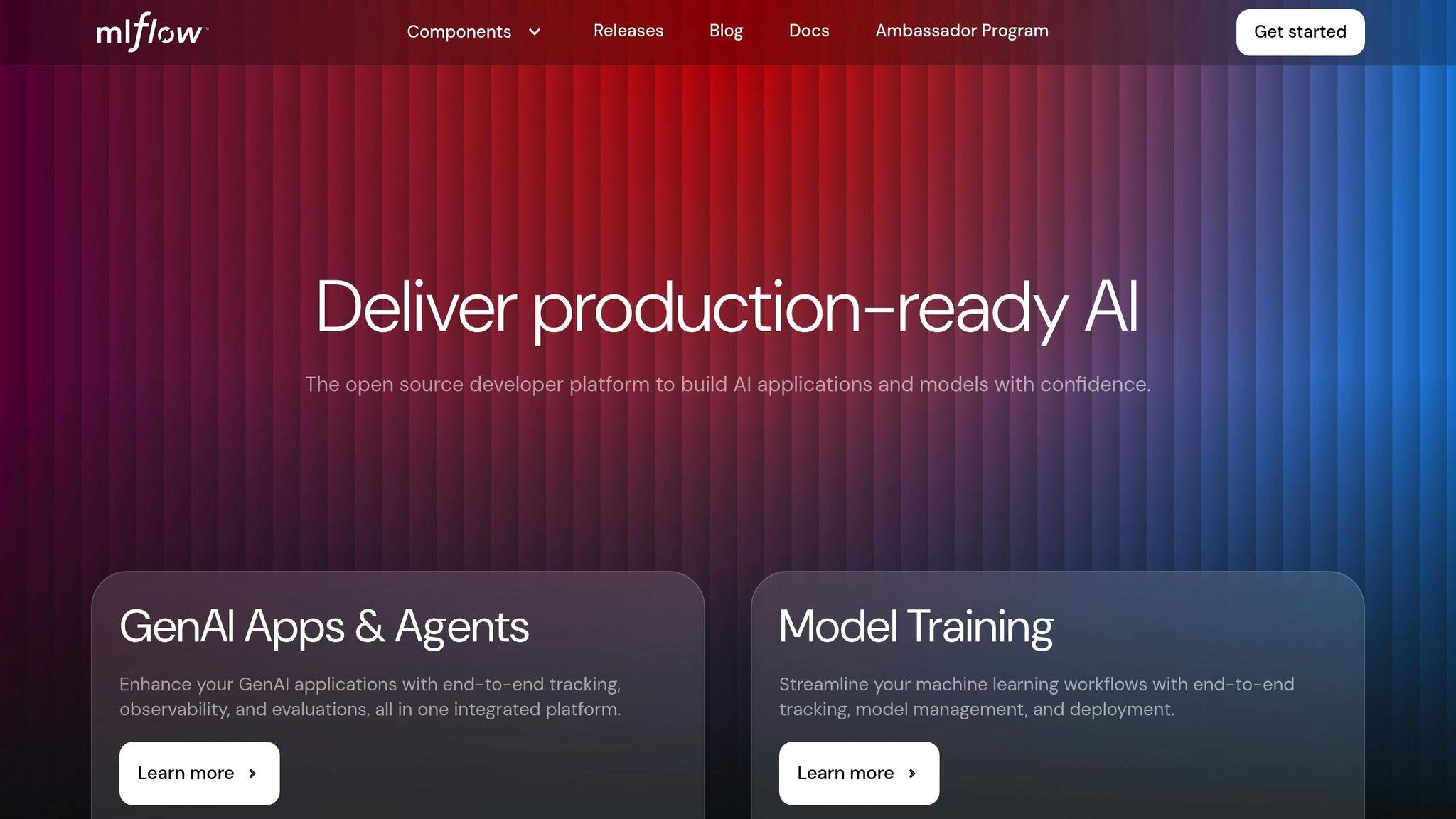
MLflow is a standout platform for tracking machine learning experiments, perfectly aligning with Agile's iterative approach. It provides a dashboard to log parameters, metrics, code versions, and model artifacts for every experiment, making it easier to evaluate model improvements quickly.
One of MLflow's strengths is its ability to compare model performance across different iterations. After each sprint, teams can clearly see how changes impact performance metrics. This visibility helps identify successful approaches and eliminate those that miss the mark. In fact, a 2024 survey revealed that over 60% of AI development teams use MLflow or similar tools to improve collaboration and reproducibility in Agile workflows.
MLflow also includes a model registry feature, offering version control for trained models. Teams can seamlessly promote models through stages - development, staging, production - while maintaining traceability. This feature supports continuous delivery, a cornerstone of Agile development.
The platform is open-source and free to use, but for managed services, Databricks offers enterprise support starting at $99 per month per user.
DVC for Data and Model Version Control
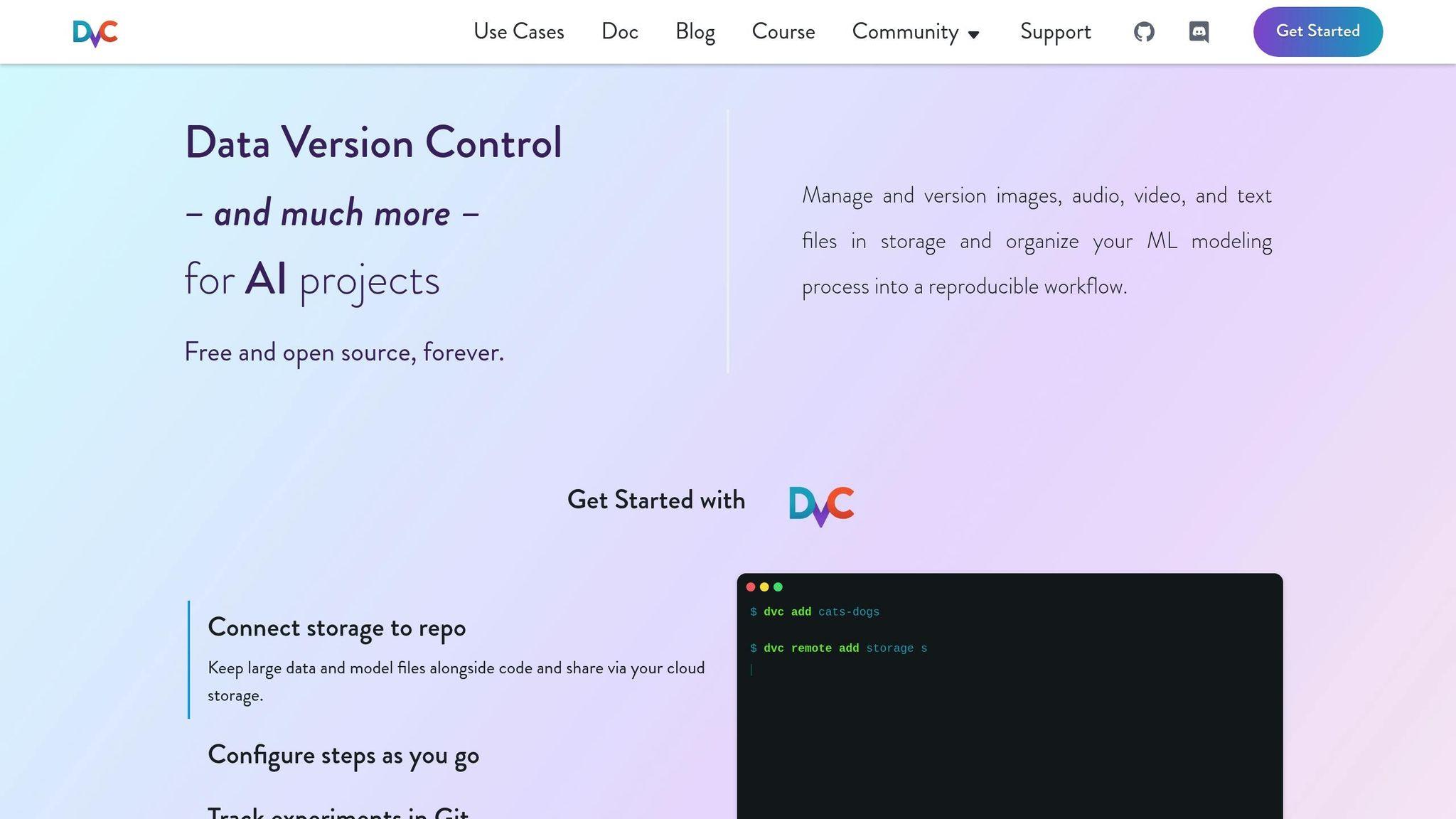
Data Version Control (DVC) extends Git's capabilities to handle large datasets and model files, addressing a gap Git cannot fill on its own. By tracking data and model versions alongside code changes, DVC ensures reproducibility throughout Agile iterations.
In 2023, enterprise adoption of DVC grew by 35% year-over-year, driven by the increasing need for better data and model versioning in iterative workflows. DVC allows data scientists to share and reproduce experiments without duplicating massive files, making collaboration easier.
Its pipeline feature is another highlight. Teams can define data processing workflows that automatically track dependencies between stages. If data changes during a sprint, DVC identifies which processes need re-running, saving time and ensuring consistency. With remote storage options, it also supports cloud-based collaboration.
DVC is open-source, but enterprise features are available through DVC Studio, starting at $12 per user per month.
BentoML and Kubeflow for Model Deployment
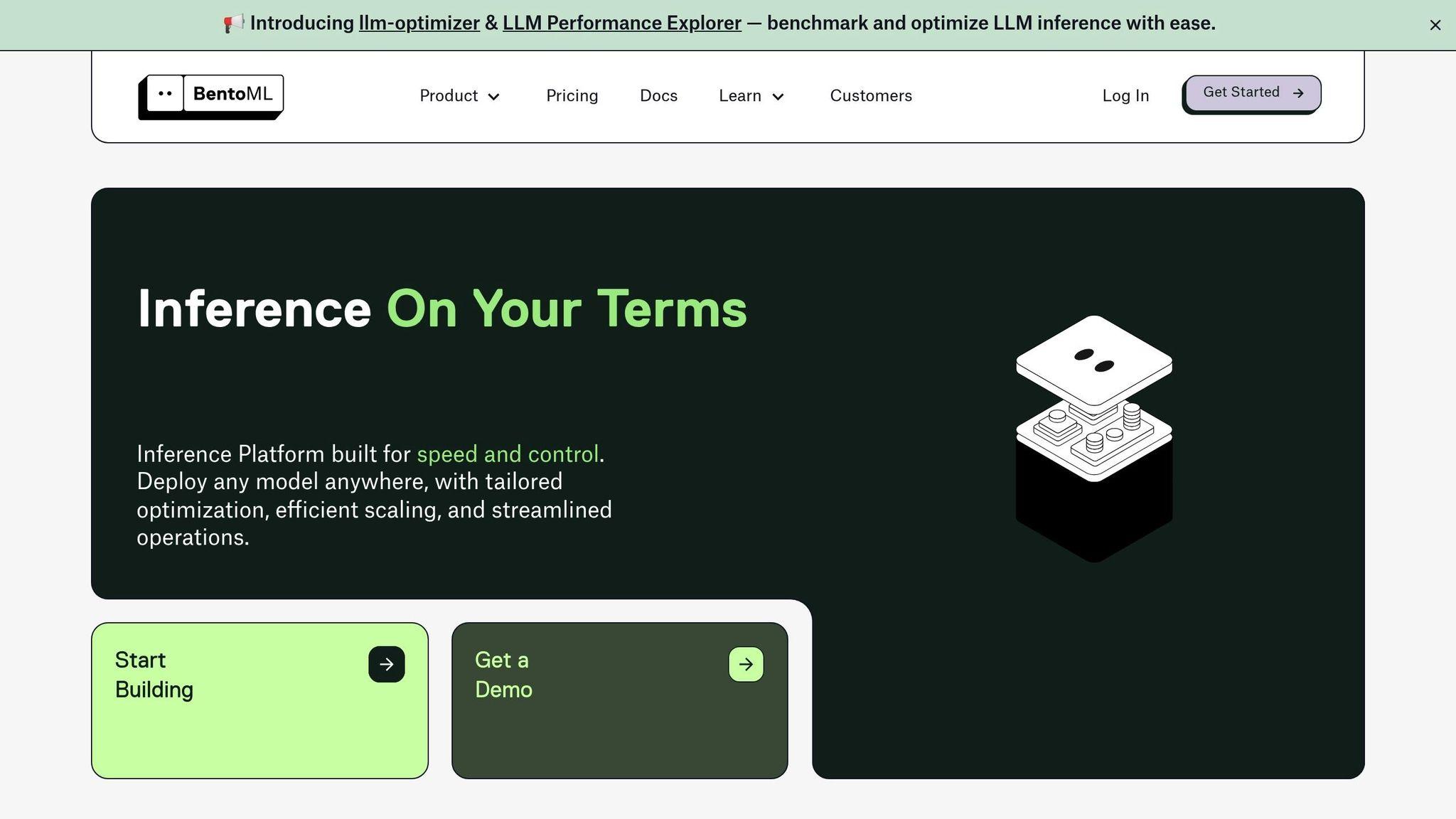
Model deployment often slows down development, but BentoML simplifies this step by packaging models and their dependencies into standardized containers. This approach aligns well with the microservice architectures commonly used in Agile development, reducing deployment friction.
Kubeflow Pipelines complements BentoML by orchestrating complex machine learning workflows on Kubernetes. The combination of these tools enables teams to manage model serving and automate pipeline workflows independently, supporting faster iteration cycles. Over 40% of Fortune 500 companies use Kubeflow Pipelines for scalable machine learning workflows.
Both tools integrate smoothly with continuous integration and deployment practices, automating tasks like model retraining, performance validation, and updates based on predefined criteria. This automation reduces manual effort and supports frequent releases.
BentoML is open-source, with commercial support and cloud deployment options starting at $49 per month per deployment. Kubeflow is also open-source, with managed cloud services (e.g., Google Cloud AI Platform) priced at $0.10 per hour per pipeline run.
| Tool | Primary Function | Key Agile Benefit | Starting Price (USD) |
|---|---|---|---|
| MLflow | Experiment tracking & model management | Supports iterative development and reproducibility | Free; $99+/month for managed services |
| DVC | Data and model version control | Enables collaboration and reproducibility | Free; $12+/user/month for Studio |
| BentoML | Model deployment as API | Rapid iteration and easy deployment | Free; $49+/month for cloud deployment |
| Kubeflow | Workflow orchestration | Scalable, automated pipelines | Free; $0.10+/hour for managed services |
How to Implement Agile for AI-Powered Apps
Bringing Agile into the world of AI-powered app development requires a thoughtful approach that blends software development practices with the unique demands of continuous model experimentation. Unlike traditional app projects, AI development thrives on experimentation, making adaptability and flexibility non-negotiable.
Adapting Agile for AI Workflows
To make Agile work for AI tasks like data preprocessing, model training, and ongoing experimentation, adjustments are necessary. For example, sprint planning should include dedicated time for data collection, cleaning, feature engineering, and experimenting with models.
Kanban boards can also be customized to reflect AI-specific workflows. Adding stages like "Data Ready", "Model Training", and "Model Evaluation" makes it easier to track progress and identify bottlenecks. This level of transparency ensures the team stays on top of each phase of development.
Sprint durations may need tweaking too. While traditional software sprints often span two weeks, AI projects benefit from shorter, more frequent iterations to accommodate the fast pace of model experimentation and refinement.
Data dependencies can throw a wrench into the works, as Agile's standard methods don’t always account for issues like data quality or unexpected model performance problems. Building buffer time into the schedule can help teams stay on track despite these challenges.
By tailoring these processes, teams create a foundation for collaboration, which is essential for navigating AI's unique complexities.
Team Collaboration and Communication
Daily stand-ups take on added importance in AI projects. In addition to discussing progress and blockers, teams should address model performance metrics, data quality concerns, and experiment results to ensure alignment on both technical and business goals.
AI development teams often need a diverse mix of skills, including data scientists, developers, UI/UX designers, and domain experts who can validate model outputs. Regular sprint reviews with stakeholders ensure the project stays on course, while daily stand-ups help resolve technical challenges quickly.
Maintaining clear, concise documentation is also key. A shared log for experiments and decisions can bridge the gap between technical and non-technical team members, making it easier for everyone to stay informed.
Involving stakeholders throughout the process minimizes the risk of misalignment between what the AI can deliver and what the business needs. Demonstrating model behavior - not just performance metrics - helps stakeholders grasp the AI’s capabilities and limitations.
Appeneure offers a great example of how these collaborative practices can be tailored to AI app development.
Appeneure's Approach to AI App Development
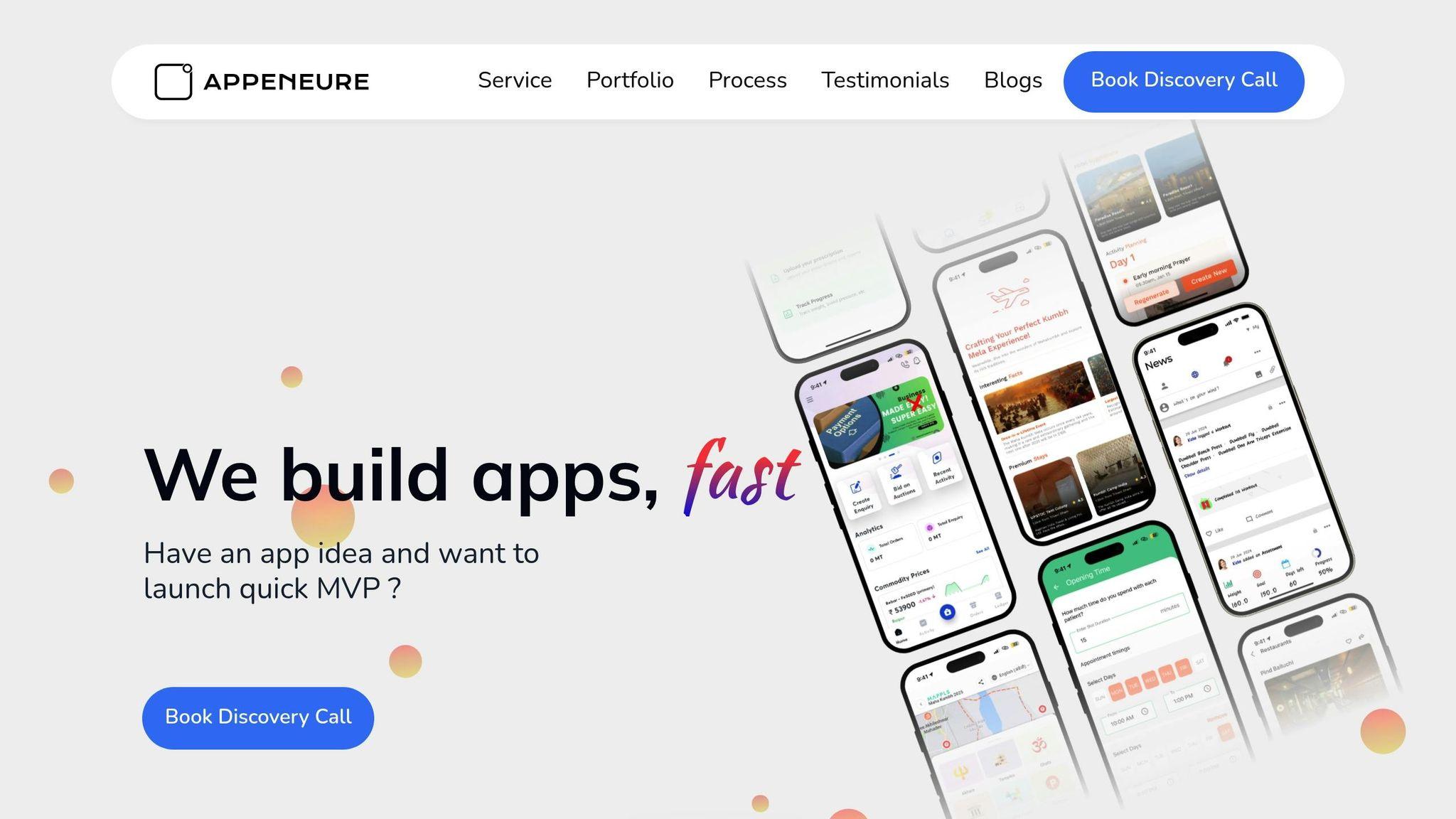
Appeneure combines Scrum and Kanban methodologies to run iterative sprints, enabling rapid prototyping and feedback loops. Their approach shows how established Agile practices can adapt to the specific challenges of AI development while keeping user experience and business value front and center.
"Using agile methodologies, we develop and deploy your product efficiently, ensuring scalability and rapid updates."
– Appeneure
Their six-step process - Idea, Wireframe, Design, Development, Testing, and Launch - integrates Agile principles, particularly during the Development phase. This ensures that AI-powered apps are built with the same level of planning and user focus as traditional apps, while accommodating the experimental nature of machine learning.
Cross-functional collaboration is at the heart of Appeneure's strategy. Teams of AI specialists, developers, and UI/UX designers work together to align technical accuracy with user-friendly design. This approach proves especially effective in industries like health tech, where precision in AI models must coexist with intuitive interfaces.
Appeneure also prioritizes scalability and rapid updates, which are critical in AI development. Their Agile process allows for quick iteration cycles that incorporate user feedback and model improvements without derailing the development timeline.
With experience across a wide range of projects - from travel apps to career guidance tools - Appeneure demonstrates how Agile principles can be adapted to various AI use cases. Whether it’s building dating apps with recommendation systems or fitness apps offering personalized coaching, their focus on flexibility, collaboration, and iterative delivery ensures consistent results while tailoring the process to each project’s unique needs.
Conclusion
Agile frameworks bring a structured yet flexible approach to AI app development. By incorporating Scrum's iterative cycles and Kanban's continuous workflows, they effectively address the unpredictability of data pipelines and the fast-paced nature of model updates. This makes Agile particularly suited to the experimental and data-driven demands of AI projects.
A key strength of Agile lies in its focus on frequent reviews, stakeholder feedback, and collaborative teamwork. This approach ensures that teams can adapt quickly and make well-informed decisions throughout the development process, even as project requirements evolve.
Specialized tools like MLflow, DVC, BentoML, and Kubeflow play a crucial role in bridging the gap between experimentation and production. These tools enable teams to track progress, evaluate results, and refine applications in real time, ensuring a smoother transition from concept to deployment.
Success in Agile AI development hinges on collaboration. When data scientists, developers, UI/UX designers, and domain experts work together seamlessly, the result is a balance between technical precision, user-friendly design, and business goals.
For businesses venturing into Agile methodologies for AI app development, working with experienced partners can make all the difference. Appeneure exemplifies this with their proven ability to combine technical skill with user-focused design, navigating the complexities of AI to create solutions that truly meet user needs.
In a world where adaptability is key, Agile frameworks empower teams to move swiftly, learn from each iteration, and turn challenges into opportunities. By embracing this mindset, businesses can transform the uncertainties of AI development into a competitive edge.
FAQs
How do Agile frameworks like Scrum and Kanban help address the unique challenges of developing AI-powered apps?
Agile frameworks such as Scrum and Kanban work exceptionally well for AI-driven app development because they focus on adaptability and incremental progress. These methods empower teams to respond swiftly to changes in AI models, test innovative ideas, and fine-tune algorithms using ongoing feedback.
AI projects often come with unique challenges: unpredictable results, the constant need for testing, and frequent data-based adjustments. Agile helps navigate these hurdles by breaking tasks into smaller, more manageable cycles, allowing for regular reviews and continuous improvement.
At Appeneure, their deep experience in AI-powered app development aligns perfectly with Agile methodologies. This allows them to create flexible, user-centric solutions while addressing the ever-changing demands of AI technology.
How do I decide between Scrum and Kanban for managing AI development projects?
When deciding between Scrum and Kanban for AI development, the choice largely hinges on the specifics of your project. Scrum is well-suited for projects with clearly defined goals and strict timelines, as its structured sprints ensure steady, incremental progress. On the other hand, Kanban shines in scenarios where requirements are fluid or the workflow is continuous, thanks to its flexibility and visual task management.
For instance, if you're developing an AI-powered app and anticipate frequent changes in requirements as the project progresses, Kanban's adaptability can be a game-changer. But if your AI project is driven by set milestones and firm deadlines, Scrum’s organized approach might provide the structure you need.
How do tools like MLflow, DVC, and BentoML support Agile development for AI-powered applications?
Tools like MLflow, DVC, and BentoML are game-changers when it comes to making Agile development smoother for AI-driven projects. These tools tackle some of the biggest hurdles in machine learning workflows by enabling experiment tracking, version control, and reproducibility - key elements that align perfectly with Agile's focus on continuous improvement and iterative progress.
Take MLflow, for instance. It makes tracking experiments and deploying models much simpler. DVC steps in as a powerful version control system, specifically designed for managing datasets and machine learning models. Then there’s BentoML, which streamlines the process of deploying machine learning models as APIs, making integration into applications more straightforward. Together, these tools ensure the development process stays efficient, scalable, and ready to adapt to the ever-changing demands of AI projects.
More from the studio